
A good ground operator is the person who makes an airport’s ground-side operation work safely and predictably: coordinating aircraft turns, people, equipment, information, and time from arrival through departure. The job is not simply “getting a plane ready.” It involves monitoring changing conditions, aligning ramp and passenger-service teams, communicating with the flight crew and operations control, and resolving problems before they affect safety or the schedule. The U.S. Bureau of Labor Statistics counted about 286,000 aircraft cargo handling supervisors and ramp agents in 2023, underscoring the scale of the workforce that supports ground operations. A typical day moves through preparation, aircraft turnaround, disruption management, safety checks, and handover—not necessarily in that order.
What a ground operator does during an aircraft turnaround
“Ground operator” is a broad industry term rather than one standardized job title. It can refer to an airline or airport operations employee, a ground-handling coordinator, or a supervisor responsible for organizing the services an aircraft needs while parked. The International Air Transport Association’s Airport Handling Manual describes ground handling as a collection of activities and standards covering areas such as ramp operations, baggage, passenger services, and aircraft servicing. In practice, the operator’s job is to connect those activities so they happen safely and in the right sequence.
A turnaround begins when an aircraft arrives and ends when it is released for its next flight. Depending on the airline, aircraft, airport, and route, the ground operator may coordinate or monitor unloading, baggage transfer, cleaning, catering, refueling, passenger boarding, and pushback. The operator does not necessarily perform each task; the central responsibility is often to confirm that the right teams are ready, that constraints are understood, and that outstanding work is visible.
Pre-arrival planning and team readiness
Before the aircraft reaches its stand, the operator checks the flight’s estimated arrival, stand assignment, aircraft type, turnaround requirements, staffing, and any known constraints. These may include a late inbound aircraft, a gate change, a mobility-assistance request, a tight connection bank, or equipment that is unavailable. The operator shares the plan with relevant teams and watches for changes that could affect the arrival or departure.
This preparation matters because airport work is interdependent: baggage teams need access to the aircraft, passenger-service teams need accurate boarding information, and ramp staff need a safe work area. A schedule change can affect several teams at once. The operator therefore treats the plan as a live coordination tool rather than a fixed checklist.
Arrival, ramp safety, and aircraft servicing
Once the aircraft arrives, ground staff guide it into position or manage the stand according to local procedures. The operator monitors the handoff between flight crew and ground teams, checks that equipment is used in the correct sequence, and follows progress on tasks such as unloading bags, cleaning, catering, and refueling. Exact duties vary by employer and airport, and some tasks require separate qualifications or are performed by specialist teams.
Safety is not a separate phase: it applies throughout the turn. The Federal Aviation Administration’s ground-safety guidance identifies hazards including jet blast, aircraft movement, vehicle conflicts, falls, and foreign-object debris. A good operator watches for unsafe conditions, reinforces stand rules, and ensures that teams know when an aircraft or piece of equipment may move. If a hazard arises, protecting people and the aircraft takes priority over preserving the timetable.
Departure readiness and release
As departure approaches, the operator checks whether essential tasks are complete and whether any unresolved issue could prevent an on-time or safe departure. That may mean confirming that baggage and cargo are accounted for, the passenger process is progressing, servicing is complete, equipment is clear, and the appropriate teams have communicated their status. The flight crew and airline operations remain responsible for their own operational decisions; the ground operator supplies accurate information and coordinates the ground-side work.
The final minutes often require quick prioritization. If boarding is delayed or a service vehicle is late, the operator identifies what can proceed safely, who needs an update, and whether the departure estimate should change. Once the aircraft leaves the stand, the operator records or passes on outstanding information and turns attention to the next arrival.
How a ground operator manages time, communication, and disruption
A ground operator’s day is shaped by overlapping deadlines and rapid changes. The role combines operational control—tracking the status of flights and resources—with practical coordination among people who may work for different employers. The International Civil Aviation Organization’s Safety Management Manual emphasizes hazard identification and risk management as core parts of aviation safety management. That principle applies on the ramp as well as in the air: operators need to recognize when a routine task is becoming an operational risk.
Live coordination across teams
The operator may communicate with ramp crews, passenger services, baggage teams, maintenance, fueling providers, dispatch, airport control, and the flight crew. Clear messages should identify the flight or stand, the issue, the action needed, and the time sensitivity. A vague report such as “the bags are behind” is less useful than a concise update that states which bags or process are delayed, the expected impact, and who is handling it.
Communication also includes listening and verification. A task marked complete in one system may still require a confirmation from the team doing the work. Good operators close the loop rather than assuming that a message was received or acted on.
Disruption recovery and prioritization
Disruptions include weather, late inbound aircraft, staffing shortages, equipment faults, baggage issues, medical events, and air-traffic restrictions. The operator assesses what has changed, identifies which flights or tasks are affected, and escalates decisions beyond their authority. They may help arrange replacement equipment or staff, update the estimated departure time, or coordinate a revised sequence of work.
This is not simply a race to recover minutes. The right response balances safety, regulatory requirements, customer needs, and operational consequences. The Bureau of Transportation Statistics tracks causes of U.S. airline delays, including late-arriving aircraft, aviation-system delays, extreme weather, and factors within an airline’s control. Those categories show why ground teams need both a planned process and the flexibility to adapt: the source of a delay may be outside the operator’s control, but the quality of coordination still affects what happens next.
Passenger and baggage impacts
Ground decisions affect passengers even when operators rarely meet them. A stand change can alter boarding routes; a delayed bag connection can affect onward travel; and a slow handoff between teams can reduce the time available to board. Operators help limit confusion by passing accurate updates to passenger-facing staff and ensuring that operational changes reach the teams responsible for communicating with travelers.
Baggage is one example of how the ground operation connects to measurable service outcomes. SITA’s Baggage IT Insights reports that the global mishandling rate was 6.9 bags per 1,000 passengers in 2023, with transfers a significant part of the challenge. That figure is not a measure of any one operator’s performance, but it illustrates why accurate bag tracking, correct loading information, and reliable connections between teams matter.
The skills and judgment behind effective ground operations
Ground operations demand more than speed. A good operator combines procedural discipline with situational awareness: knowing what should happen, noticing when reality differs from the plan, and choosing the safest useful response. The International Air Transport Association’s ground-handling standards provide a common framework for consistent procedures, while employers and airports add local rules, training, and equipment requirements.
Situational awareness and decision-making
Situational awareness means maintaining an accurate picture of the aircraft, people, equipment, timing, and hazards in the operator’s area of responsibility. It also means anticipating what may happen next. For example, if an arriving aircraft is late and the stand is needed for another flight, the operator should flag the conflict early rather than wait until both flights are ready to use the same space.
Good judgment includes knowing when to stop work and escalate. Operators are not expected to improvise around safety rules or make decisions reserved for pilots, air traffic control, maintenance, or airline operations leadership. They are expected to report facts clearly and involve the right authority.
Procedure, teamwork, and handover
Standard operating procedures help teams perform recurring work consistently, particularly when several organizations share responsibility for a flight. Teamwork means understanding the boundaries between roles and making sure that a task is not assumed to belong to someone else. A dependable handover records what is complete, what remains open, and what the next operator needs to know.
The U.S. Occupational Safety and Health Administration’s airport guidance highlights the importance of training, hazard awareness, and safe practices around ground-support equipment. These are practical foundations, not paperwork for its own sake: consistent training can help prevent vehicle collisions, equipment misuse, and injuries in a busy ramp environment.
Performance measures—and their limits
Airports and airlines may track turnaround time, on-time departure, baggage performance, equipment availability, safety events, and missed service deadlines. These indicators help managers identify recurring bottlenecks and assess whether resources match demand. They should be interpreted together: a fast turnaround is not a success if it depends on unsafe shortcuts, and a delay may reflect weather or air-traffic restrictions rather than poor ground work.
A useful illustration is the difference between an outcome and a controllable action. “Flight departed late” is an outcome; “the assigned belt loader arrived after the planned time” is a more specific operational fact that can be investigated. Good operators document what happened accurately, helping teams distinguish preventable process failures from conditions that could not reasonably be controlled.
What the workday looks like in practice
There is no universal shift pattern for a ground operator. Work may follow flight banks, overnight cargo schedules, or rotating shifts that include early mornings, nights, weekends, and holidays. The pace can change abruptly: a quiet period may be followed by multiple arrivals, a weather disruption, or an aircraft swap. Some operators work outdoors in noise and changing weather; others coordinate from an operations office while maintaining close contact with ramp teams.
Consider a late-afternoon flight arriving behind schedule while another aircraft is due to use the same stand. The operator checks the revised arrival estimate, confirms whether the stand can be reassigned, alerts the teams whose work plans will change, and monitors the arriving aircraft’s turnaround. If a service vehicle is unavailable, the operator seeks an approved alternative or escalates the issue. The goal is not to force every step into the original timetable; it is to maintain a safe, coordinated plan and keep affected teams informed.
This example also shows why the job is often invisible to passengers. When coordination works, the aircraft is serviced, boarded, and dispatched without anyone noticing the sequence of decisions behind it. When it does not, small delays can compound across stands, crews, bags, and connections.
Conclusion: the ground operator keeps the operation connected
A good ground operator plans for arrivals, coordinates the aircraft turnaround, monitors ramp safety, manages changing information, and helps teams recover from disruption. The role depends on accurate communication, sound judgment, procedural discipline, and an understanding of how one task affects the next. Industry data on delays and baggage handling reinforces the broader point: airport performance is produced by connected teams, not by a timetable alone.
For travelers, aviation students, and airport employers, a useful next step is to learn how local ground-handling procedures, safety management systems, and turnaround measures fit together. The best measure of an operator is not simply whether a flight leaves quickly, but whether people and aircraft are handled safely, information is reliable, and the operation is prepared for what comes next.
Sources: U.S. Bureau of Labor Statistics, Occupational Employment and Wage Statistics, Aircraft Cargo Handling Supervisors and Ramp Agents, 2023, https://www.bls.gov/oes/2023/may/oes537061.htm; International Air Transport Association, Airport Handling Manual, https://www.iata.org/en/publications/manuals/airport-handling-manual/; Federal Aviation Administration, Ground Safety, https://www.faa.gov/airports/airport_safety/ground_safety; International Civil Aviation Organization, Safety Management Manual, Doc 9859, https://www.icao.int/safety/SafetyManagement/Pages/Guidance-Material.aspx; U.S. Bureau of Transportation Statistics, Airline On-Time Statistics and Delay Causes, https://www.transtats.bts.gov/OT_Delay/OT_DelayCause1.asp; SITA, Baggage IT Insights 2024, https://www.sita.aero/resources/surveys-reports/baggage-it-insights-2024/; Occupational Safety and Health Administration, Ground Operations and Airport Safety, https://www.osha.gov/airports
Related Posts

Solo travellers demand flexibility when booking hotels on their own
A solo hotel booking is a reservation made by one…

How to Choose the Best Luxury Resort in Phuket for Beginners
Why Phuket Is the Ultimate Destination for Luxury Resort Stays…
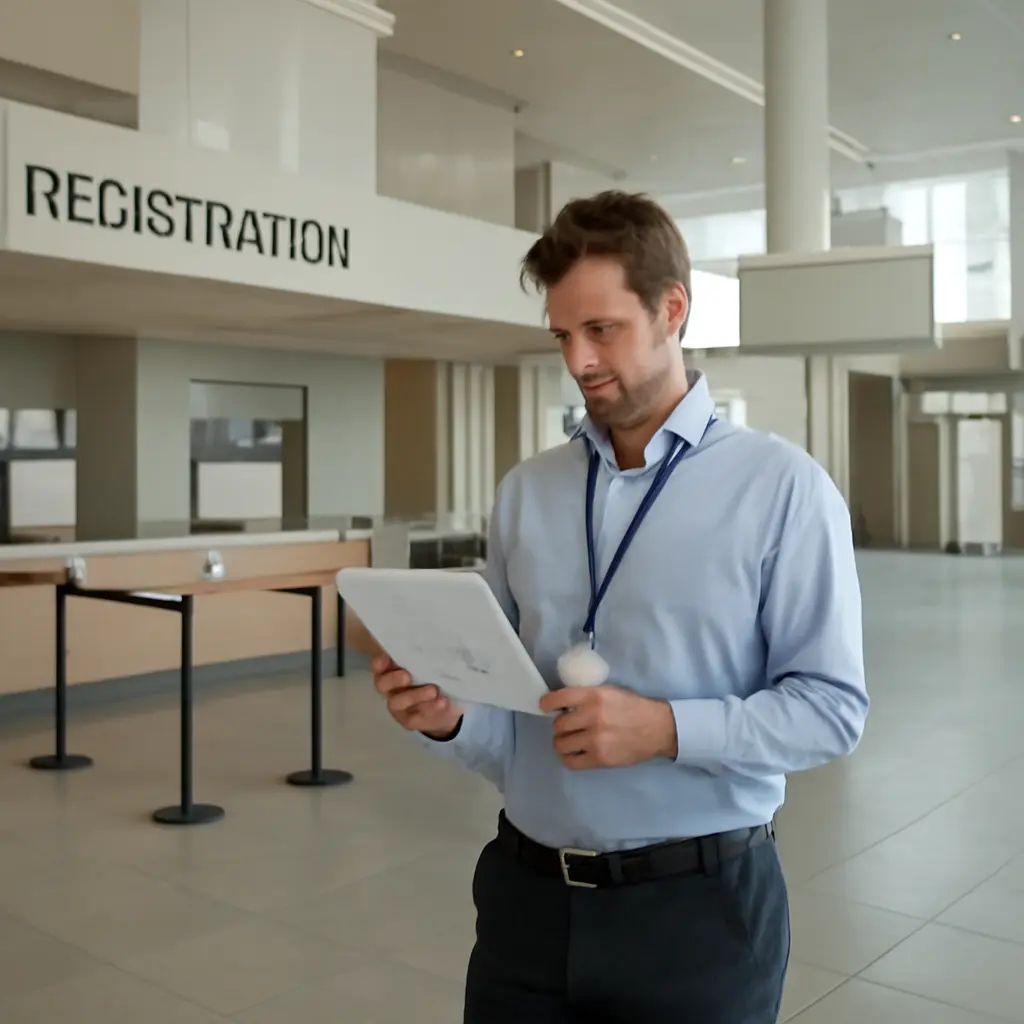
Hidden logistics that separate chaotic conferences from seamless ones
Conference logistics are the behind-the-scenes systems that move people, information,…